Beyond the Finish Line: How Real-Time Alliances Reshape Tactical Depth in Multiplayer Racing Hybrids
Written by Carlo Keller · Jul 31, 2026
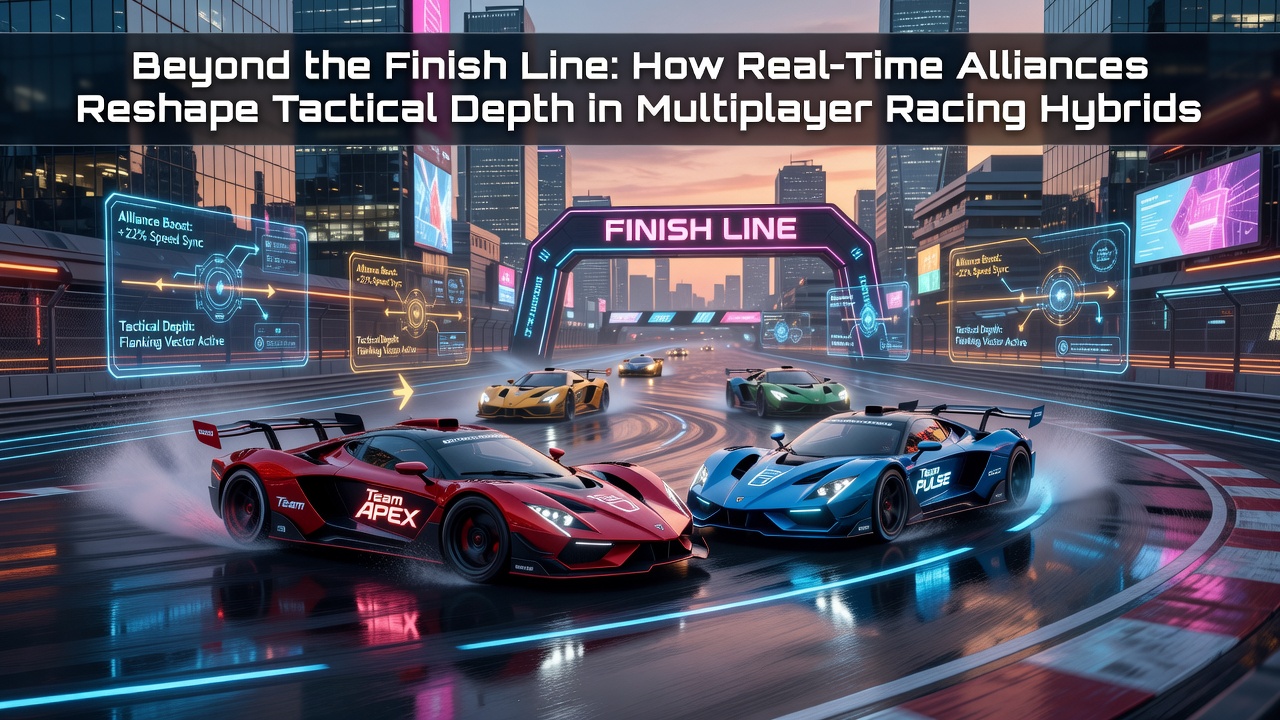
Beyond the Finish Line: How Real-Time Alliances Reshape Tactical Depth in Multiplayer Racing Hybrids
Racing hybrids blend traditional speed mechanics with elements drawn from strategy and action genres, creating experiences where drivers manage resources, navigate dynamic environments, and respond to opponents in real time, while data from industry reports shows participation in these titles rising steadily through 2025 and into mid-2026.
Real-time alliances emerge when players connect during active races to exchange information, coordinate maneuvers, or share temporary boosts, and this mechanic shifts focus from individual performance toward collective decision making because alliances form, dissolve, and reform based on track conditions and rival positions.
Evolution of Hybrid Racing Formats
Early racing games emphasized lap times and vehicle handling, yet developers began incorporating combat systems, upgrade paths, and team objectives in subsequent releases, which led to hybrids that reward both driving skill and tactical awareness, according to figures released by the Entertainment Software Association in early 2026.
By July 2026 several major titles had introduced updated alliance protocols that allow voice or text coordination without pausing gameplay, and these changes build on prior experiments where limited team features appeared in competitive modes.
Mechanics Behind Real-Time Alliances
Players initiate alliances through in-game signals or quick menu selections that establish temporary links, granting shared visibility of radar data or the ability to pass items such as speed boosts or defensive shields, while the system automatically dissolves connections when one participant crosses a checkpoint or falls too far behind.
Engineers designed these protocols to balance accessibility with complexity, so new participants can join existing groups mid-race without extensive tutorials, but advanced users develop custom strategies that exploit alliance timing for maximum advantage on narrow sections or during weather shifts.
Tactical Layers Added by Alliance Systems
Individual racers once focused solely on overtaking and drafting, yet alliance features introduce choices about when to support teammates, when to break away for personal gain, and how to counter coordinated enemy groups, and research indicates these options increase average match duration because players spend more time negotiating positions rather than rushing to the finish.
One case examined by university analysts in Canada demonstrated that teams using real-time voice channels achieved higher placement consistency across multiple events, while solo drivers adapted by monitoring chat logs and predicting alliance patterns from observed movements.

Resource management grows more intricate when allies can transfer energy or repair kits, which forces opponents to track multiple targets simultaneously instead of isolating single threats, and this redistribution mechanic rewards foresight because stockpiling items for later distribution can determine race outcomes on longer circuits.
Observed Patterns in Competitive Play
Tournament data collected through 2026 reveals that alliance-heavy matches produce more frequent lead changes and fewer dominant solo performances, because coordinated groups can block paths, stage ambushes at choke points, and recover from setbacks faster than isolated competitors, and observers note these trends appear across both casual and ranked queues.
Developers respond to these patterns by adjusting matchmaking algorithms that pair alliance-prone players with similarly inclined groups, thereby maintaining competitive balance without restricting the feature itself.
Technical Implementation and Player Adaptation
Network code handles alliance synchronization by prioritizing low-latency updates for shared data streams, and this requires servers located in multiple regions to keep response times under acceptable thresholds during peak hours, while regional reports from European gaming bodies confirm stable performance in updated builds released around June 2026.
Players adapt through practice modes that simulate alliance scenarios, allowing individuals to test timing for item handoffs or defensive formations without risking ranked progress, and community resources compile these techniques into guides that spread rapidly after each major patch.
Conclusion
Real-time alliances continue to expand the strategic possibilities within multiplayer racing hybrids by turning isolated races into dynamic group interactions, and ongoing updates scheduled beyond July 2026 suggest further refinements to alliance tools that integrate additional variables such as environmental hazards and vehicle customization effects. Data collected across platforms shows sustained interest in these mechanics, which indicates they address player demand for deeper coordination without replacing core racing fundamentals.