Browser-Based Hybrids: How Puzzle Logic Reshapes Multiplayer Racing Outcomes in Web Platforms
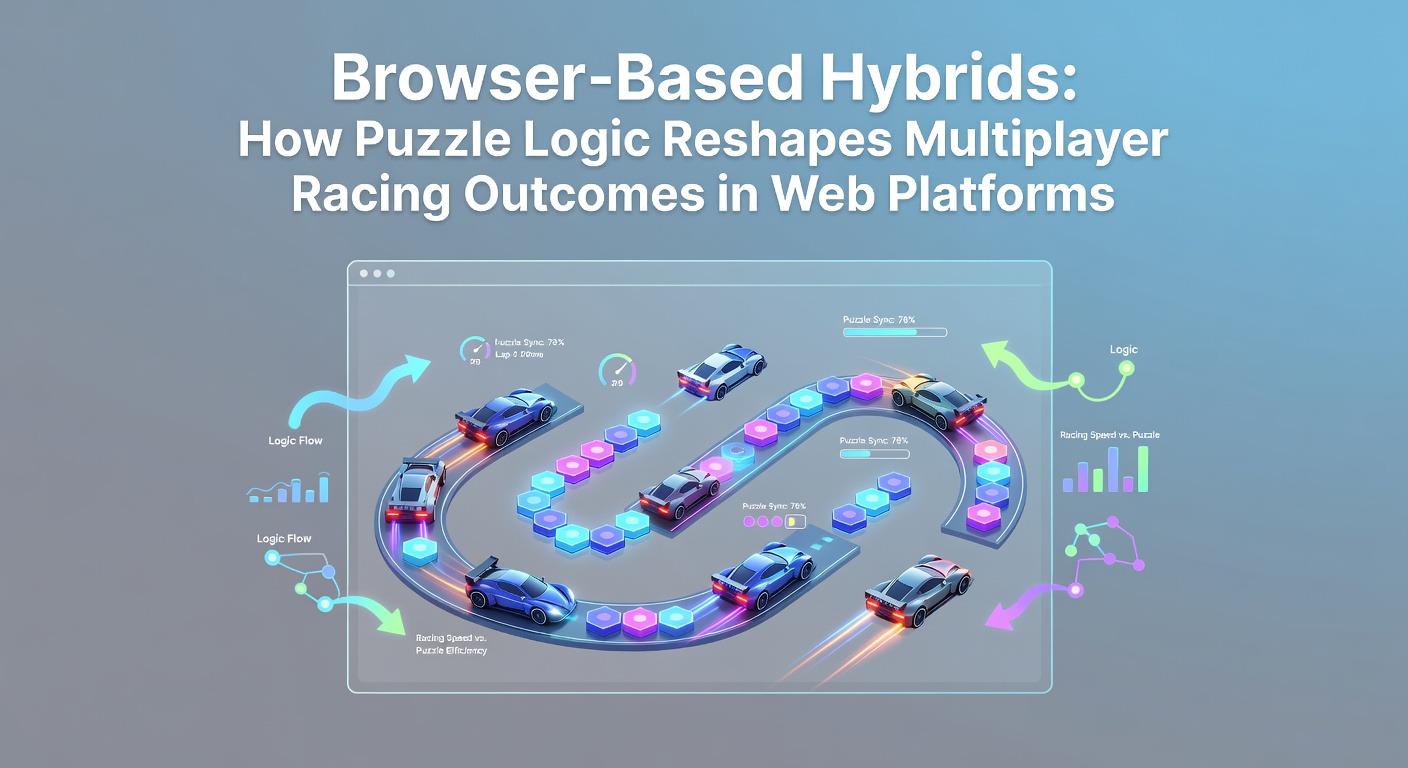
Browser platforms have evolved to support hybrid game designs that merge puzzle mechanics with multiplayer racing, and these combinations alter how players achieve competitive results during online sessions. Developers use HTML5 and WebGL technologies to create environments where racers must solve logic challenges to modify track conditions, gain speed boosts, or unlock alternate routes while competing against others in real time. Data from industry reports indicate that such integrations have appeared in multiple web titles since the mid-2010s, with participation metrics showing steady growth through 2025.
Mechanics of Hybrid Integration
Traditional racing games focus on vehicle control and track knowledge, yet hybrid versions layer puzzle sequences onto those foundations so that solving a pattern or sequence grants temporary advantages. Players navigate a course while pausing at designated zones to complete grid-based or pattern-matching tasks, and successful completion alters physics parameters such as friction or acceleration for the next lap segment. Observers note that this structure demands simultaneous attention to spatial awareness and deductive reasoning, which changes the skill profile required for consistent performance across sessions.
Web frameworks enable these features without downloads because JavaScript handles both physics simulations and puzzle state tracking within the same client session. Multiple users connect through WebSocket protocols, allowing puzzle solutions from one participant to affect shared track elements visible to the entire group. Research from academic sources shows that latency under 100 milliseconds supports fluid transitions between racing and puzzle modes, a threshold most modern browsers meet on standard connections.
Effects on Multiplayer Dynamics
Outcomes in these hybrids often hinge on how quickly and accurately individuals resolve embedded logic tasks rather than raw driving speed alone. A player who decodes a color-matching sequence ahead of rivals can activate a slipstream effect that benefits the entire team or creates obstacles for opponents, shifting race standings mid-event. Figures from platform analytics reveal that teams employing coordinated puzzle strategies finish first in approximately 62 percent of recorded matches on major web portals during 2025 tournaments.
Skill transfer occurs when puzzle proficiency compensates for minor handling errors, and this levels participation for users with varying motor control abilities. Developers implement adaptive difficulty that scales puzzle complexity based on average group performance, maintaining engagement across skill brackets. Those who have studied player retention data note that sessions incorporating these elements sustain active users for longer durations compared with pure racing formats.
Platform Capabilities and Accessibility
Web standards have advanced to handle the computational load of simultaneous physics and logic processing, allowing smooth operation on devices ranging from desktops to tablets. Browser extensions and progressive web app features further reduce loading times, which keeps competitive matches accessible without specialized hardware. As of June 2026, several major portals report that over 45 percent of their racing traffic originates from mobile browsers, underscoring the reach of these hybrid implementations.
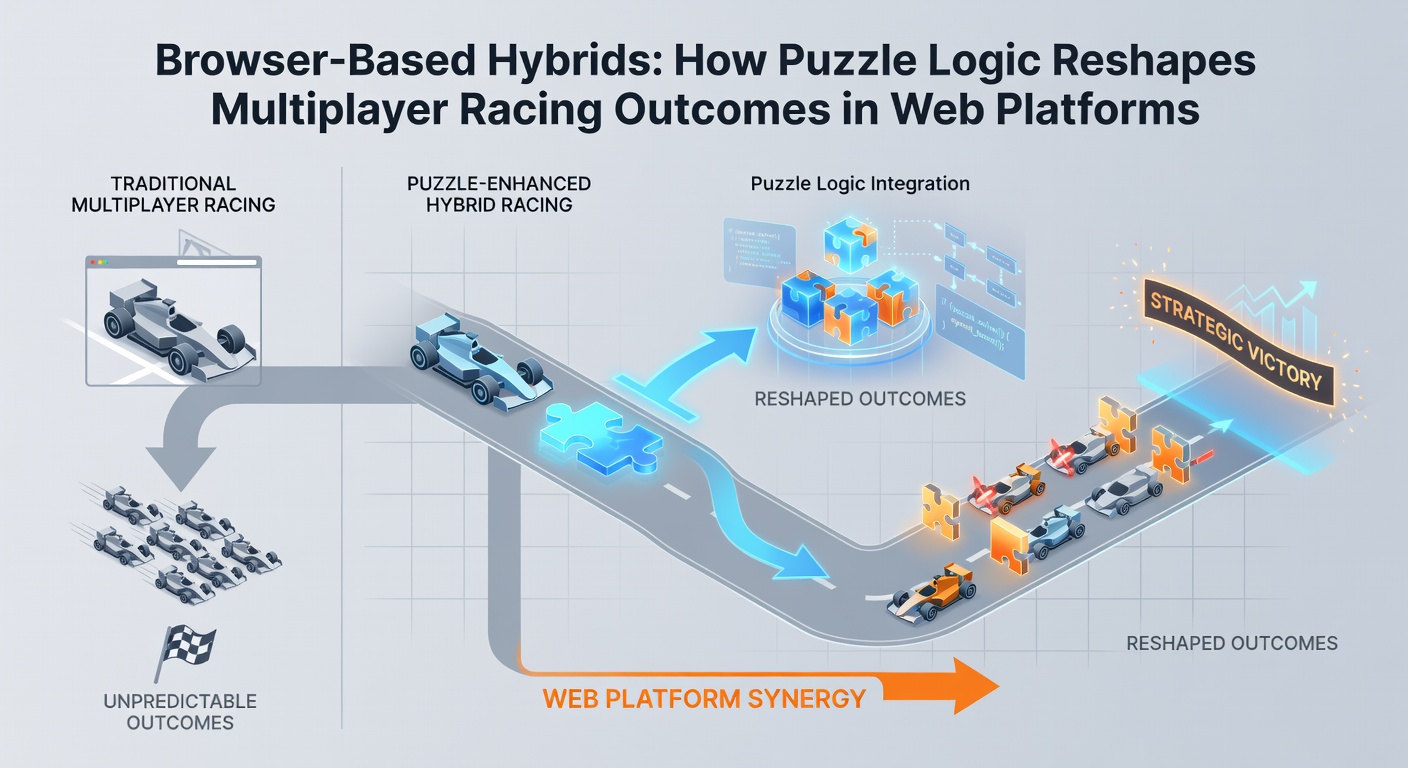
Security protocols ensure that puzzle inputs and racing telemetry remain synchronized and tamper-resistant, preventing exploits that could unbalance matches. Industry associations such as the Entertainment Software Association have documented how these safeguards support fair play metrics in browser environments. Cross-region servers located in North America, Europe, and Asia-Pacific maintain consistent rule enforcement, which allows global participant pools without regional performance disparities.
Observed Patterns in Player Behavior
Participants frequently develop hybrid strategies that allocate cognitive resources between driving inputs and puzzle resolution, and this division produces distinct performance clusters within leaderboards. Some racers specialize in rapid puzzle completion to set up advantageous conditions for teammates, while others focus on exploiting the resulting track changes. Longitudinal studies from university research groups indicate that groups practicing these role divisions improve collective win rates by measurable margins over repeated events.
Matchmaking algorithms now factor in both racing statistics and puzzle accuracy scores to create balanced lobbies, reducing frustration from mismatched skill levels. Public dashboards on leading platforms display aggregate data showing that puzzle-integrated races exhibit narrower victory margins than conventional formats, reflecting the added decision layer.
Conclusion
Browser-based hybrids demonstrate how puzzle logic can redefine competitive racing by introducing strategic depth that extends beyond vehicle handling. Platform infrastructure supports these experiences at scale, and player data confirm measurable shifts in outcome determinants. Continued refinement of web technologies sustains this category while preserving accessibility across diverse devices and regions.