Digital Racing Simulations and Their Unexpected Influence on Spatial Awareness Development in Players
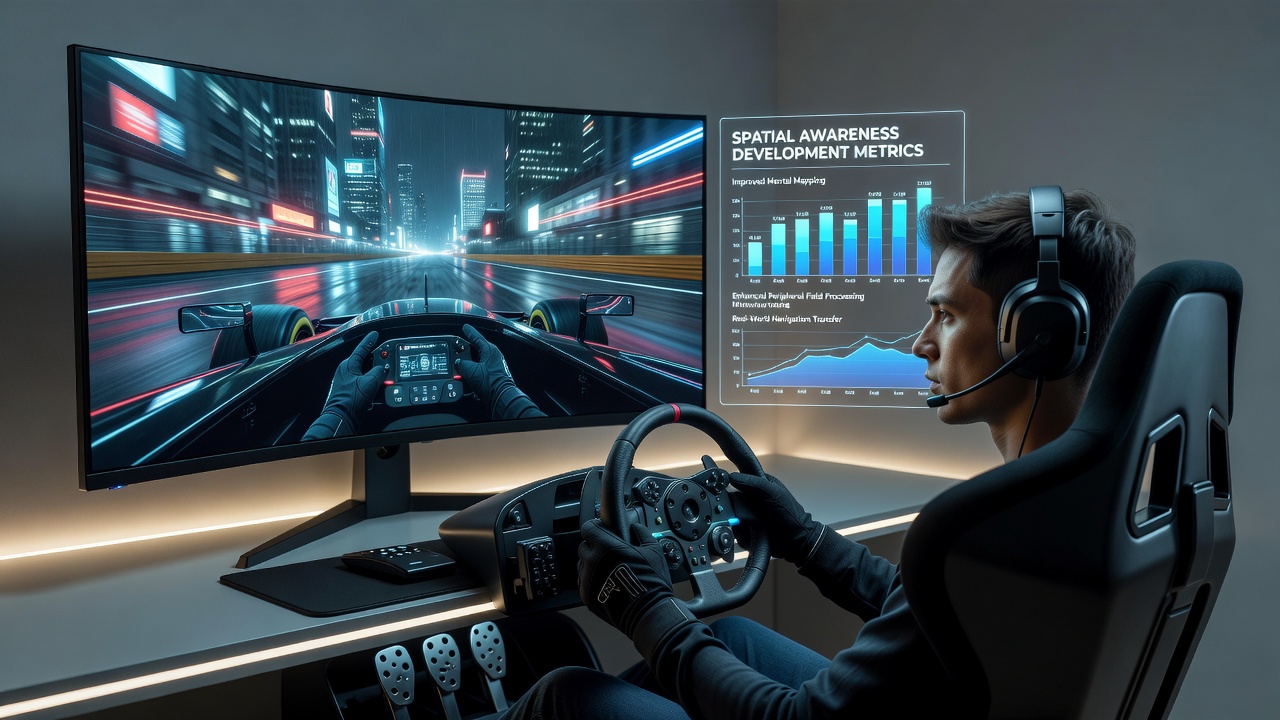
Digital racing simulations have expanded far beyond simple entertainment over the past decade, and researchers continue to examine how these environments shape cognitive skills in users. Players navigate complex three-dimensional tracks while managing speed, obstacles, and vehicle dynamics, which creates repeated exposure to spatial tasks that mirror real-world navigation challenges. Data from multiple studies shows measurable improvements in certain aspects of spatial processing among regular participants, though the extent of transfer to everyday activities remains under investigation.
Mechanics Behind Racing Simulations and Spatial Processing
Modern racing simulations incorporate physics engines that calculate vehicle movement through virtual spaces with high precision, forcing players to judge distances, angles, and trajectories in real time. These systems often include first-person or third-person perspectives that require constant mental mapping of the environment, and developers have refined these elements through iterative updates based on player feedback and performance metrics. Observers note that participants develop stronger abilities to rotate objects mentally and estimate relative positions after extended sessions, skills that align with established measures of spatial awareness used in psychological testing.
Studies indicate that the combination of motion cues, depth perception requirements, and dynamic obstacle avoidance contributes to these outcomes, while simpler games without such elements show weaker associations. In June 2026 a report compiled by researchers at the University of Melbourne highlighted how simulation software used in training programs for motorsport teams produced consistent gains on standardized spatial reasoning assessments among amateur drivers who trained for several weeks.
Research Findings on Cognitive Transfer Effects
Evidence from controlled experiments reveals that individuals who engage regularly with high-fidelity racing simulations demonstrate enhanced performance on tasks involving mental rotation and spatial visualization compared to control groups. One study conducted at a Canadian research institute tracked participants over eight weeks and recorded average improvements of 12 percent on spatial awareness batteries, with effects appearing most pronounced in those who practiced at least four hours per week. These gains occurred alongside better lane positioning accuracy within the simulations themselves, suggesting a direct link between in-game demands and measurable cognitive shifts.
Additional data collected across European labs points to similar patterns, where players showed quicker responses when asked to identify rotated shapes or predict object paths after simulation exposure. The findings do not claim universal benefits for every user, yet they document reliable correlations that warrant further longitudinal work. What's interesting is how these effects appear even in non-competitive play modes, indicating that the core interaction with virtual space drives the changes rather than competitive pressure alone.
Practical Examples from Training and Education Contexts
Take one motorsport academy in Germany that integrated racing simulation modules into its junior driver curriculum in 2024; instructors reported that trainees improved their ability to anticipate corner entry points and adjust racing lines more rapidly after simulation practice. Similar programs in Australia have incorporated these tools for pilot training analogs, where spatial judgment carries direct safety implications. Researchers discovered that students who supplemented traditional coursework with targeted simulation sessions scored higher on navigation-related assessments than peers relying solely on classroom methods.
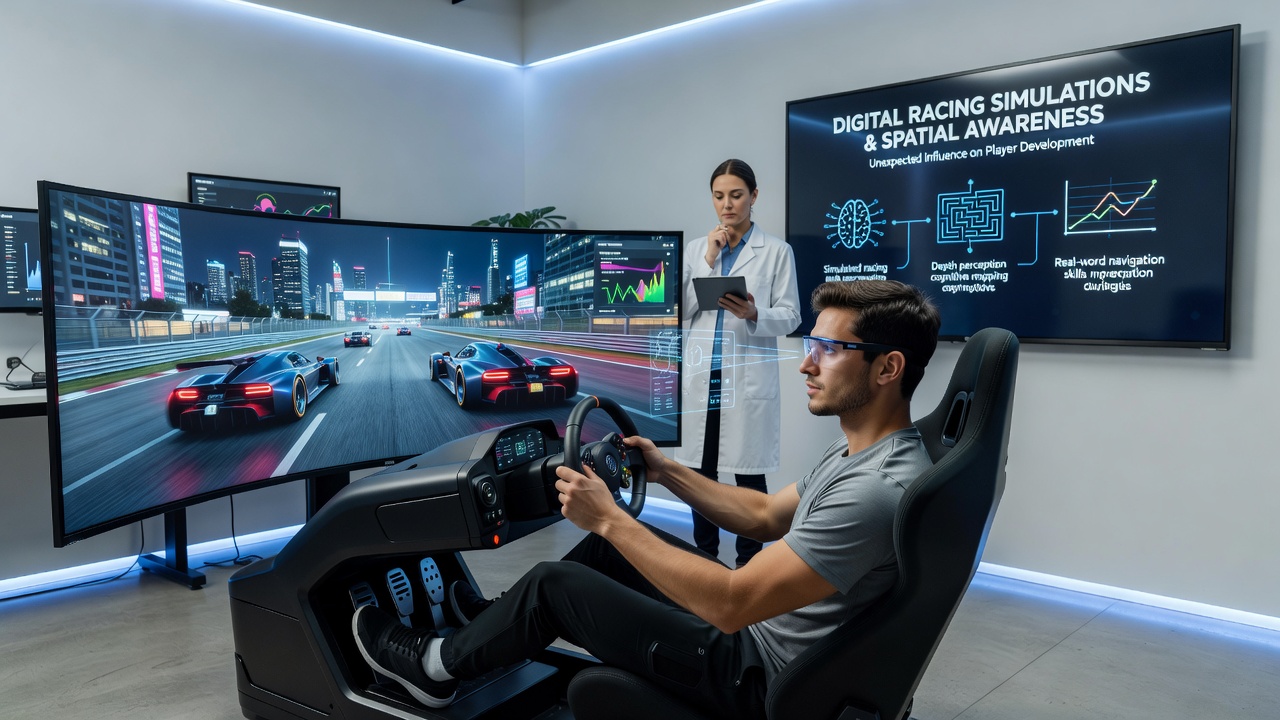
Industry reports from the International Game Developers Association document growing interest among educational technology firms in adapting racing simulation frameworks for spatial skills training, particularly in fields such as architecture and engineering. These adaptations retain core gameplay loops while adding instructional overlays that guide users through progressive spatial challenges, and preliminary trials indicate retention of learned skills for several months post-training.
Limitations and Ongoing Investigations
While patterns emerge across datasets, experts emphasize that individual differences in baseline spatial ability, frequency of play, and simulation quality influence outcomes significantly. Not every title produces equivalent effects, and lower-fidelity games often fail to generate comparable results according to comparative analyses. Ongoing work at various institutions continues to isolate variables such as session length, feedback mechanisms, and perspective switching to determine optimal conditions for skill development.
Figures released by transport safety agencies in several countries show parallel interest in using simulation data to inform driver education standards, though regulatory adoption remains gradual. The ball remains in the court of curriculum designers to integrate findings responsibly while researchers refine measurement tools for broader application.
Conclusion
Digital racing simulations continue to intersect with cognitive research in ways that extend their role beyond leisure, and accumulated evidence points to tangible influences on spatial awareness development for many players. Continued monitoring of these interactions will help clarify long-term implications across diverse populations and usage contexts.