How Browser Physics Engines Shape Player Strategies in Web-Based Racing and Sports Simulations
Written by Carlo Keller · Jul 29, 2026
How Browser Physics Engines Shape Player Strategies in Web-Based Racing and Sports Simulations
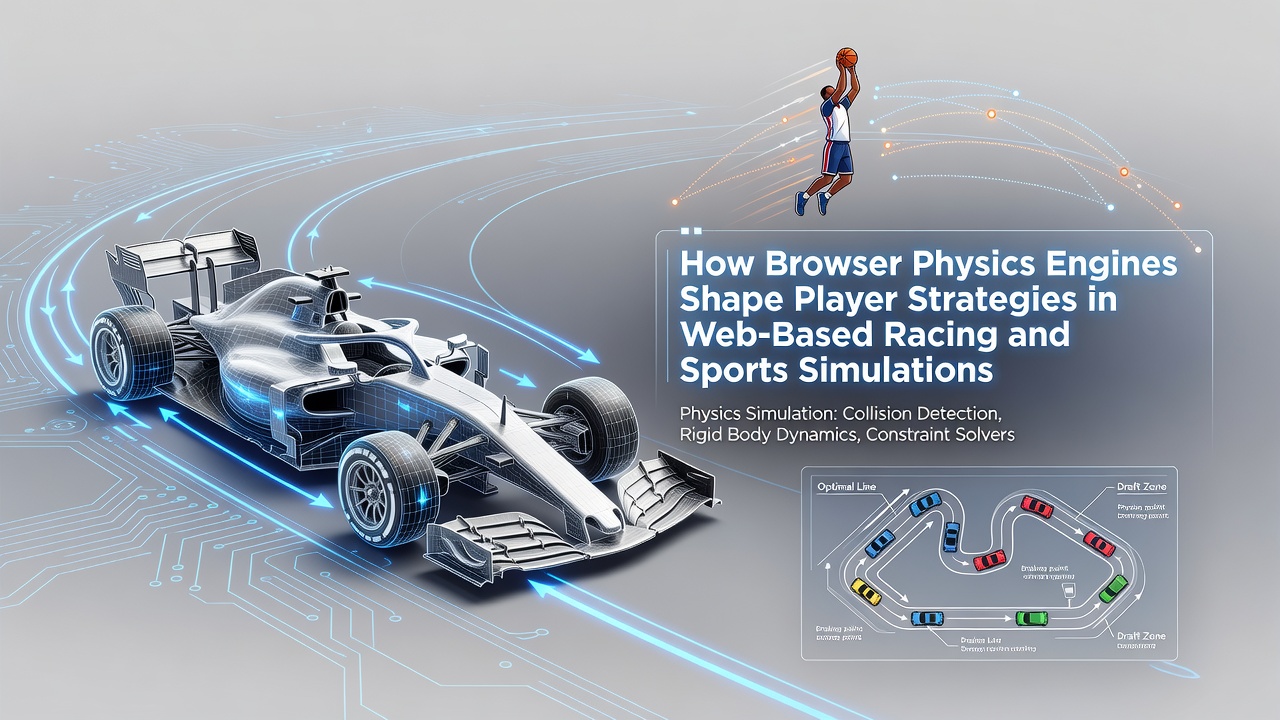
Browser-based racing and sports simulations rely on physics engines built with JavaScript libraries such as Box2D.js and Cannon.js along with WebGL rendering to calculate real-time interactions between vehicles, players, and environments. These engines process variables including velocity, friction, collision detection, and gravity within the constraints of web browsers, which forces developers to optimize code for performance across different devices and connection speeds. Players adapt their approaches accordingly because the simulated physics determine everything from acceleration curves to ball trajectories in online matches.
Core Mechanics of Browser Physics Engines
Physics engines in web environments handle calculations through discrete time steps that approximate continuous motion, and this discretization creates predictable patterns that experienced users learn to exploit. Data from performance benchmarks indicates that engines like Matter.js prioritize stability over precision when handling high-speed collisions, which leads to specific bounce behaviors in racing titles. Researchers at various institutions have documented how these approximations influence decision-making during competitive play, since a slight miscalculation in momentum transfer can alter race outcomes or scoring opportunities in sports simulations.
Collision response systems form another key component because they determine how objects interact upon contact, and browser implementations often simplify rigid body dynamics to maintain frame rates above 30 FPS on average hardware. Studies show that users develop strategies around these simplifications, such as timing jumps or drifts to take advantage of reduced friction models that appear in many HTML5 racing games. Observers note that engine constraints also limit the number of simultaneous objects processed, which encourages tactical choices in multiplayer scenarios where crowding the track or field can create advantageous chaos.
Strategic Adaptations in Racing Simulations
In web-based racing titles, players adjust cornering techniques and overtaking maneuvers based on how the physics engine models tire grip and suspension responses, and these adjustments emerge directly from observable engine behaviors rather than external tutorials. For instance, some simulations apply angular momentum in ways that reward early braking on certain surfaces, leading competitors to map optimal racing lines through repeated testing sessions. Figures from user analytics platforms reveal that sessions lasting beyond 45 minutes correlate with improved prediction of physics outcomes, as participants internalize the engine's response curves.
Track design elements interact with these engines to further shape tactics, since elevation changes and surface materials trigger different force calculations that browsers must resolve quickly. One study conducted in 2025 highlighted how players in browser racing communities shared data files containing custom parameter tweaks, allowing groups to test alternative physics interpretations without altering core code. And while such modifications remain within fair-use boundaries for single-player modes, competitive ladders often enforce standardized engine settings to ensure consistent strategy across matches.
Impact on Sports Simulation Gameplay
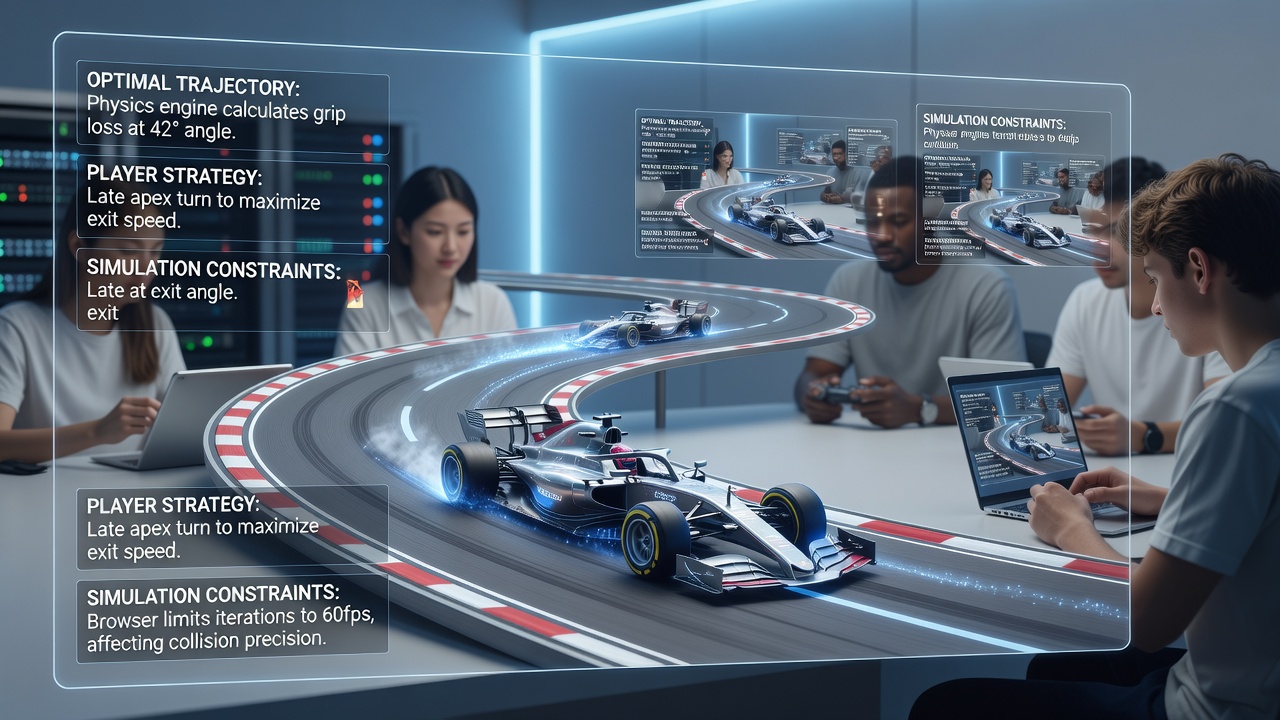
Sports simulations delivered through browsers apply similar physics principles to ball movement and athlete interactions, which creates opportunities for strategy refinement around shot angles and defensive positioning. Evidence from gameplay logs shows that participants who account for simplified gravity and drag models achieve higher win rates in games like online soccer or basketball variants, because they anticipate arc paths more accurately than those relying on real-world intuition alone. Developers integrate these engines with WebSocket communication to synchronize states across users, yet latency introduces additional variables that skilled players factor into timing decisions.
Team-based modes amplify the effect because coordinated actions must align with the engine's collision and momentum rules, prompting formations that exploit predictable rebound patterns. Data collected by industry groups indicates rising participation in browser sports titles during mid-2026, with July 2026 reports noting a 12 percent increase in active sessions compared to the prior year, attributed partly to refined physics handling in updated libraries. Those who study these trends point to academic papers examining player adaptation rates, where groups exposed to consistent engine behavior demonstrated faster strategy evolution than control groups using varied parameters.
Recent Developments and Broader Context
Updates to web standards have expanded physics capabilities through improved support for WebAssembly modules, which allow more complex calculations without sacrificing browser compatibility. A report from the Entertainment Software Association outlines how these advancements enable deeper strategy layers in racing and sports categories, as engines now manage larger object counts and finer force interactions. Industry data from the ESA further connects browser game growth to accessibility improvements that draw diverse player bases experimenting with physics-driven tactics.
Meanwhile, research institutions in Canada and Australia have examined how regional hardware differences affect engine performance, revealing that users on lower-end devices often favor defensive strategies to compensate for reduced simulation fidelity. Such findings underscore the direct link between technical implementation and in-game choices across global audiences.
Conclusion
Browser physics engines continue to define viable approaches in web-based racing and sports simulations by establishing the mathematical boundaries within which all player actions occur. As libraries evolve and hardware varies, the resulting strategy patterns reflect ongoing interplay between code constraints and human adaptation, supported by measurable data from multiple sources. This dynamic ensures that mastery involves understanding both the visible game elements and the underlying computational rules that govern them.