The Mechanics Behind Synchronized Player Interactions in Browser-Hosted Adventure and Sports Hybrids
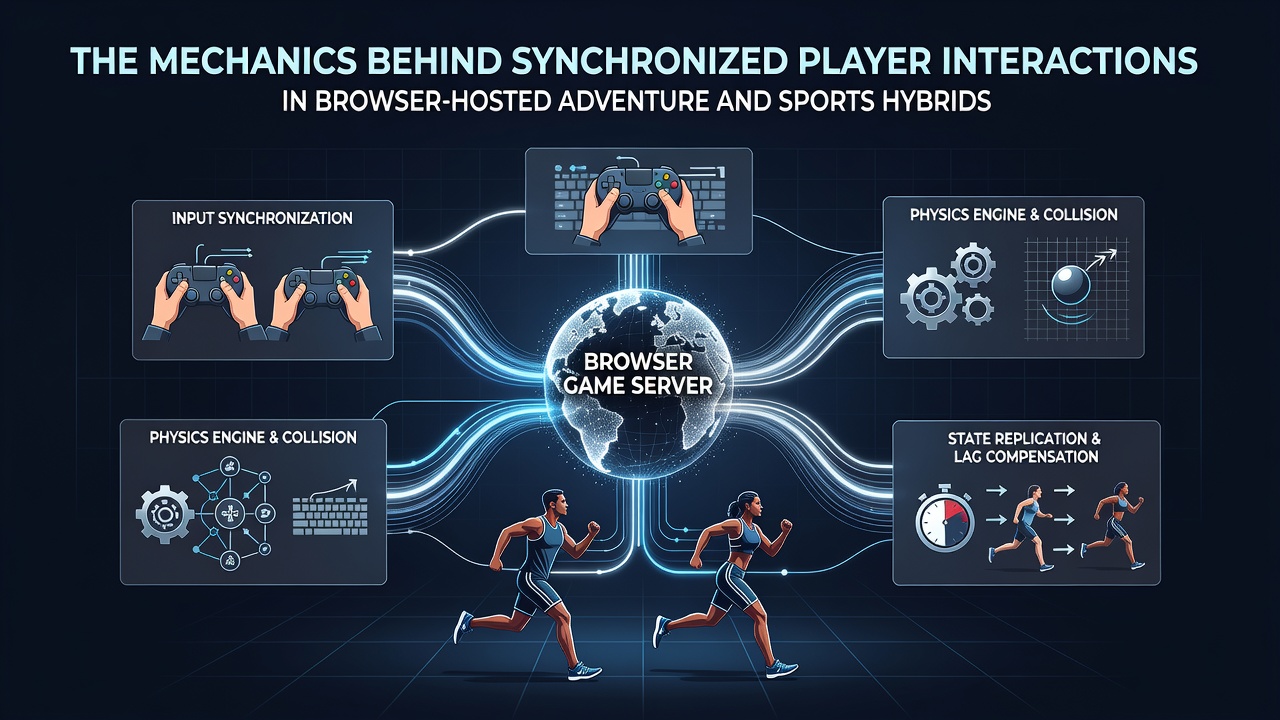
Browser-hosted adventure and sports hybrids combine exploration elements with competitive timing challenges, and synchronized player interactions form the core that keeps these experiences coherent across distributed users. Developers rely on WebSocket protocols to maintain persistent connections between clients and servers, which allows continuous exchange of position data, action states, and environmental changes without repeated HTTP handshakes. Researchers at institutions studying distributed systems have documented how these connections reduce overhead compared with older polling methods, enabling the sub-100-millisecond response windows that sports mechanics demand while still supporting narrative branching typical of adventure formats.
Core Networking Foundations
Real-time synchronization begins with the client-server model, where the server acts as the authoritative source for game state and clients handle local rendering plus input prediction. In July 2026 industry reports noted increased adoption of WebRTC data channels alongside WebSockets in hybrid titles, because WebRTC offers peer-to-peer fallback options that lower latency for players within the same geographic region. Data from the Interactive Games and Entertainment Association shows that titles using combined protocols experienced measurable drops in packet loss during peak concurrent sessions, particularly when sports sequences required precise collision detection between multiple avatars and moving objects.
State Reconciliation Techniques
Client-side prediction lets each browser simulate immediate responses to local input, yet the server later corrects discrepancies through reconciliation packets sent at fixed intervals. Experts observing large-scale deployments have recorded that effective reconciliation algorithms prioritize recent authoritative states while blending older corrections to avoid visible snapping. This approach proves especially useful in adventure segments where players explore shared worlds, because it preserves smooth camera movement even when network jitter momentarily delays updates from distant participants.
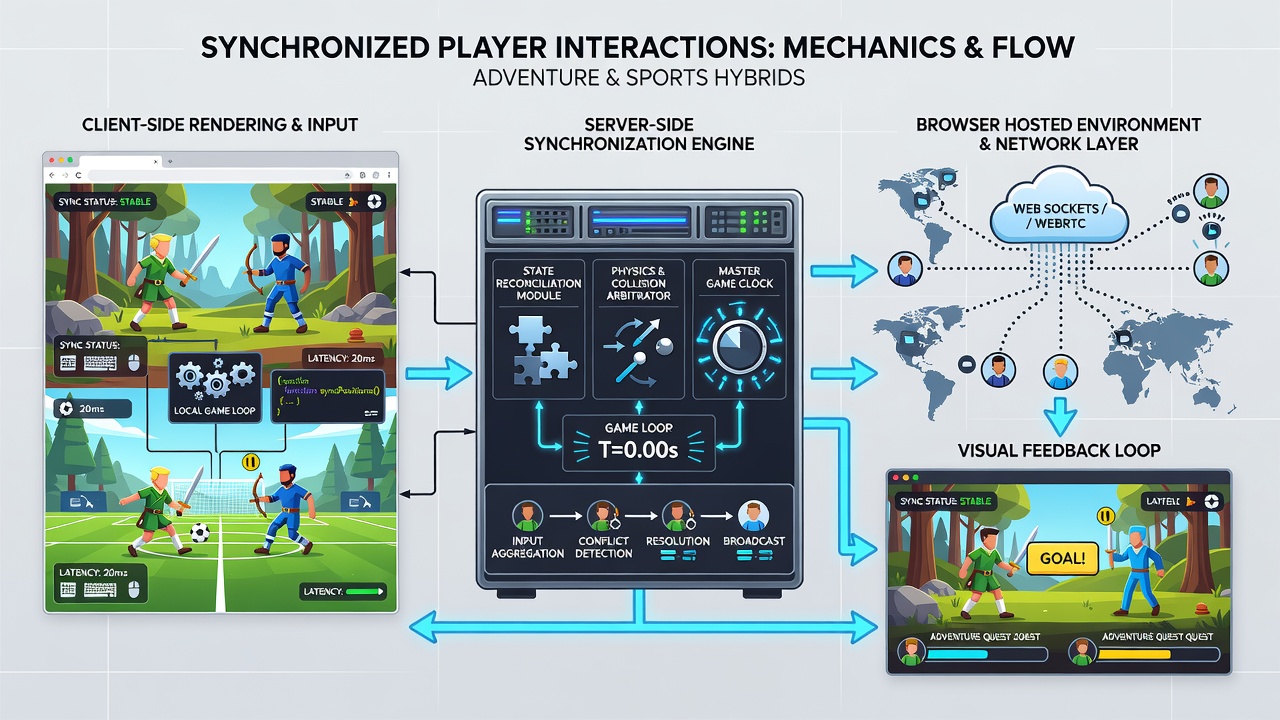
Server reconciliation further incorporates entity interpolation, smoothing the movement of remote players by rendering them slightly behind the most recent received state. Studies from university computer science departments have measured how interpolation windows of 50 to 100 milliseconds mask typical internet variance without introducing unacceptable input lag for sports actions such as timed jumps or throws. When adventure elements introduce dynamic obstacles, the same interpolation buffers prevent desynchronization that would otherwise break cooperative puzzle sequences.
Browser-Specific Constraints and Solutions
Browser environments impose additional layers of abstraction through JavaScript execution and rendering pipelines, which developers address with fixed-timestep game loops decoupled from variable frame rates. Observers note that requestAnimationFrame combined with Web Workers for physics calculations helps maintain consistent simulation rates across different hardware profiles. Performance data collected during 2025-2026 testing cycles indicated that offloading collision checks to workers reduced main-thread blocking, allowing sports timing windows to remain consistent even on mid-range mobile browsers.
Security considerations also shape synchronization design. Servers validate every critical action, such as scoring events or item transfers, before broadcasting updates, which prevents clients from injecting false states. Research published through European digital media consortia has highlighted that token-based authentication paired with sequence numbers effectively counters replay attacks common in browser-based multiplayer sessions.
Hybrid Genre Implications
Adventure components often require persistent world state across sessions, while sports segments demand frame-perfect synchronization. Hybrid implementations therefore segment authority: the server maintains long-term progress in a database while handling ephemeral sports interactions through in-memory state machines. This division allows developers to scale databases independently from real-time servers, a pattern documented in case studies of browser titles that reached several thousand concurrent users during seasonal events.
Conclusion
Synchronized interactions in these browser-hosted hybrids rest on layered protocols, prediction algorithms, and authoritative validation that together accommodate both exploratory pacing and competitive precision. Continued refinement of Web standards and browser performance continues to expand the feasible scope of such experiences without requiring native clients.