When Pixels Meet Playbooks: Analyzing Crossover Elements Between Sports Simulations and Strategy Puzzles in Digital Formats
Written by Gisela Simmons · Sep 6, 2026
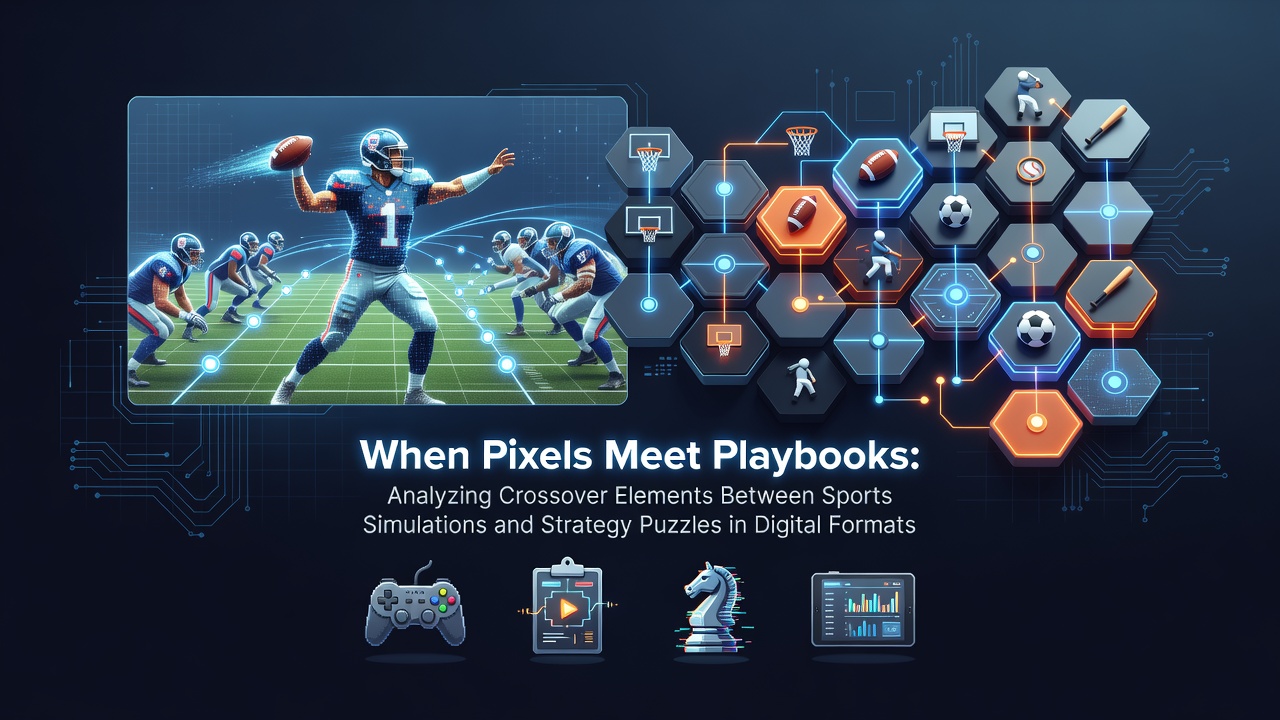
When Pixels Meet Playbooks: Analyzing Crossover Elements Between Sports Simulations and Strategy Puzzles in Digital Formats
Digital formats continue to blend mechanics from sports simulations and strategy puzzles as developers integrate tactical decision trees with real-time athletic modeling, and observers note that this convergence appears across multiple platforms as of September 2026. Research from industry reports indicates that titles combining roster management with grid-based positioning draw players who seek both physical motion simulation and abstract problem solving in single sessions. Data compiled by the Entertainment Software Association shows steady growth in hybrid genres where users adjust variables such as player stamina and formation angles while solving spatial constraints similar to those found in classic tile-matching systems.
Core Mechanics That Overlap
Sports simulations often embed puzzle structures through play-calling interfaces that require users to align multiple attributes under time pressure, whereas strategy puzzles incorporate athletic themes by assigning point values to movements that mirror passing lanes or defensive rotations. Those who've examined code repositories note that both categories rely on pathfinding algorithms and resource allocation loops, yet the presentation differs because one frames outcomes as match results while the other presents them as cleared stages. According to academic papers published by researchers at the University of Alberta, players demonstrate comparable cognitive load when optimizing sequences in either format, suggesting shared neural pathways for pattern recognition and probabilistic forecasting.
Examples Across Major Titles
One case involves football management software where users arrange set-piece routines that function like sliding-block puzzles, forcing sequential moves to create scoring opportunities without violating spatial rules. Another appears in basketball simulations that layer zone-defense adjustments onto turn-based mini-games resembling match-three mechanics, and data from platform analytics reveals higher retention rates when these layers receive equal visual weight. European trade group reports highlight similar patterns in rugby and hockey titles released between 2024 and 2026, where injury-management systems require players to solve resource-distribution problems before returning athletes to active rosters. Observers note that mobile versions often strip visual fidelity while preserving the underlying logic grids, allowing cross-platform progression that carries puzzle solutions into full simulation matches.
Technological Drivers Behind the Blend
Engine updates in September 2026 introduced improved physics layers that calculate ball trajectories alongside AI opponents capable of adapting to repeated puzzle solutions, and this combination reduces repetition while increasing strategic depth. Figures released by Canadian digital media councils indicate that cloud streaming services now support simultaneous rendering of high-fidelity athlete models and abstract overlay maps, enabling seamless transitions between full-field views and tactical planning screens. Developers integrate machine-learning models trained on both professional match footage and user-generated puzzle attempts, producing opponents that evolve based on detected player tendencies rather than fixed difficulty sliders. Such systems appear in several major releases this year, and they demonstrate measurable improvements in session length according to aggregated telemetry.
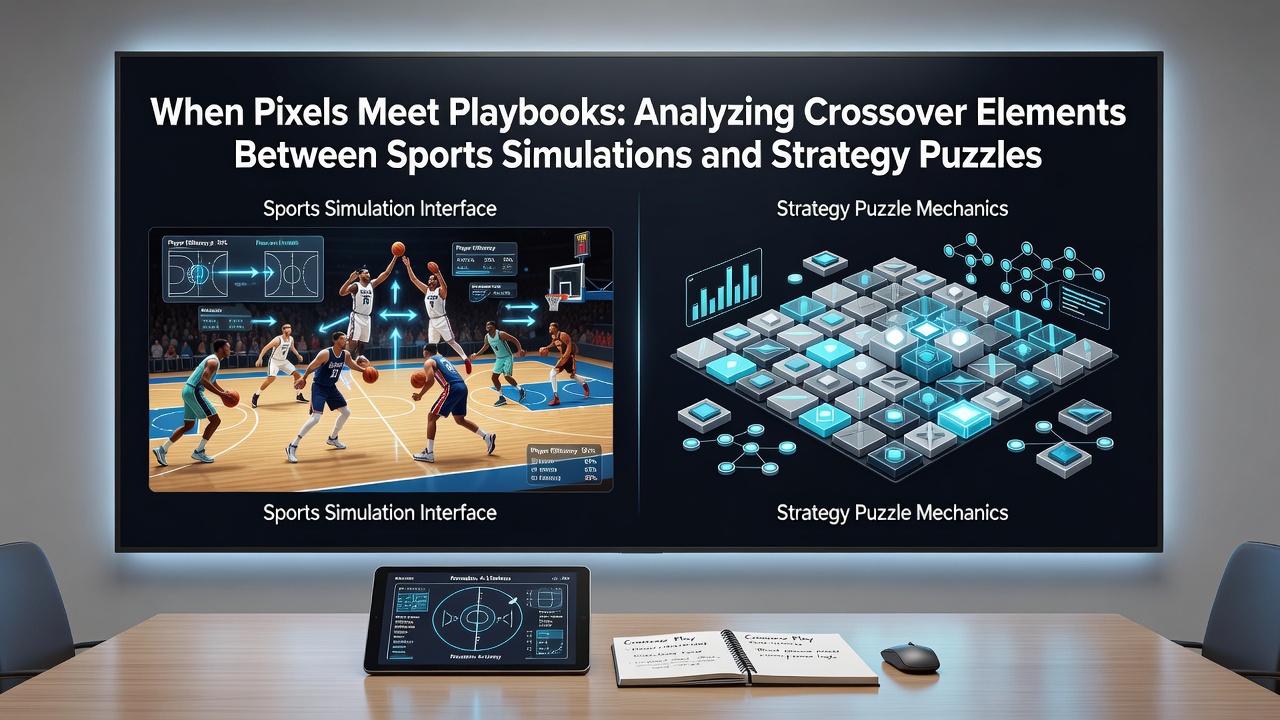
Player Behavior and Engagement Patterns
Studies conducted by university labs in Australia reveal that participants switch between simulation and puzzle modes within the same title at predictable intervals, often using puzzle segments as recovery periods before returning to continuous athletic action. Engagement metrics compiled across regions show elevated completion rates for campaigns that interleave both elements rather than segregating them into separate modes, and this pattern holds across age groups. Community forums document players creating custom challenges that combine league standings with self-imposed spatial constraints, effectively turning official releases into hybrid sandboxes. Regulatory bodies in the European Union have begun reviewing how these blended experiences affect time-on-device statistics, prompting some studios to include optional session-limit tools within the same menu structures that govern difficulty and control schemes.
Future Development Trends
Industry roadmaps presented at 2026 conferences outline plans to deepen integration through modular asset pipelines that allow puzzle grids to inherit real-time weather and fatigue data from simulation engines. Research partnerships between academic institutions and mid-sized studios aim to quantify how spatial reasoning skills transfer between the two formats, with preliminary results suggesting positive carryover effects on tactical decision speed. Hardware advancements in portable devices support higher-resolution overlays without sacrificing frame rates during rapid switches between macro strategy views and micro athletic controls. Those tracking patent filings observe increased activity around systems that reward players for discovering novel combinations of puzzle solutions within live match contexts, indicating sustained commercial interest in the crossover space.
Conclusion
The intersection of sports simulations and strategy puzzles continues to evolve through shared algorithmic foundations and presentation techniques that keep both elements visible within single experiences. Data from multiple sources demonstrates consistent player interest in titles that respect the distinct strengths of each genre while allowing fluid movement between them. As platforms and engines advance through late 2026, further refinements in AI adaptation and cross-mode progression appear likely to expand the range of available hybrids without requiring separate development tracks.